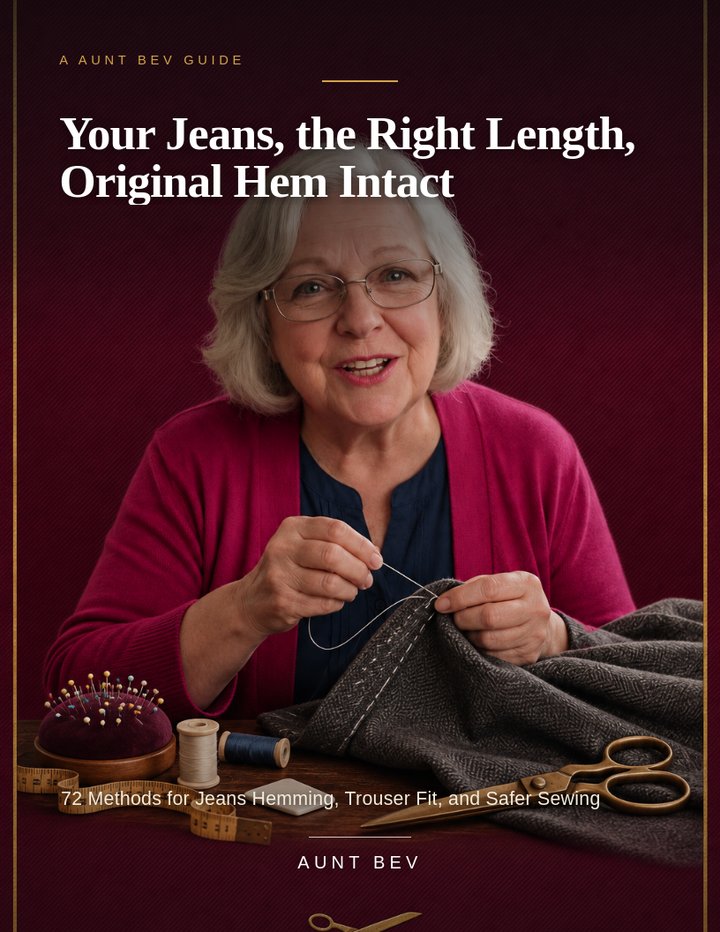
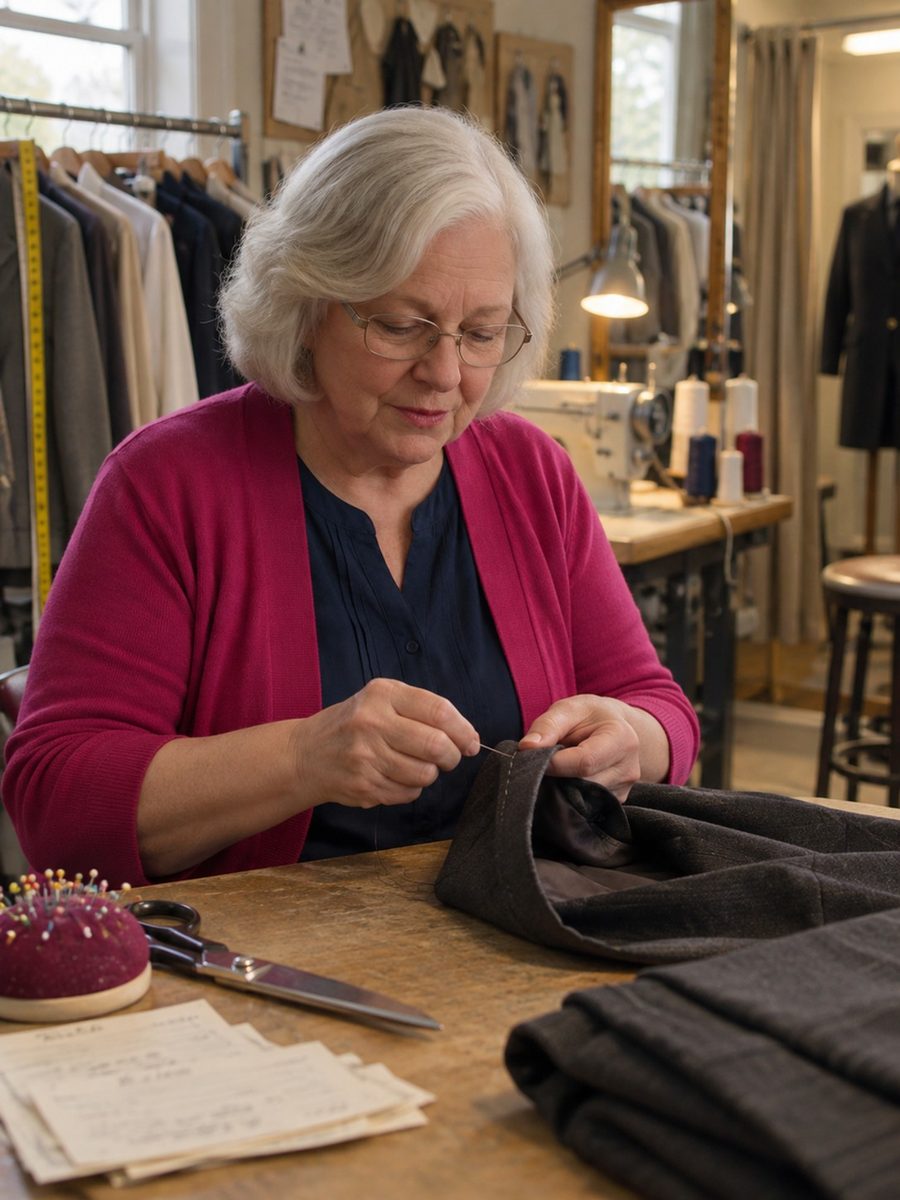
You have jeans or trousers that do not sit, hang, or end where they should. This book gives you 72 independent methods to check the garment, test a change, and compare your alteration options before you sew or pay for work.
Plus 3 separate bonus books.Including The Seven-Point Try-On.
One digital bundle. PDF to read or print, plus EPUB for e-readers.
175Pagesin the main book
11Chaptersread in any order
72Methodspick what fits
3Bonus booksall included
Instant downloadPDF + EPUB for any device or e-reader
30daysRead-It-First Guarantee30 days, every dollar back
01 · How it helps
For the moments when a garment is close, but not right
Start with the trouble you can see or feel. Then use the matching method to check what the garment is doing before you change it.
1Testing the new length
Should I try the stairs to test my pinned hem?
✓Sit, Step, and Screen the Stair Motion: sit and step in pinned jeans, but do the stair check on level floor, not real stairs. Chapter 01
What if I cut the jeans and the length is wrong?
✓The Sew-First and Trim-Later Method: sew the joining seam while all the extra denim is still attached, test it, and only then trim. Chapter 05
2Keeping the factory hem
How do I stop the seams getting mixed up at the tailor's?
✓The Inseam-and-Outseam Alignment-Mark Method: before separating, mark a line at the inseam, an X at the outseam, each with an arrow toward the waistband. Chapter 03
What if the old hem is too small for the new leg?
✓The Lower-Leg Taper for a Too-Small Factory Hem Band: don't stretch the band. Pin a temporary taper into the lower leg until they agree. Chapter 04
3When trousers pull wrong
My waistband gaps at the back. Should I just take it in?
✓The Side-Seam Vertical-Balance Check: compare the side seam with a straight doorway edge, then see if a waistband pinch changes how it hangs. Chapter 06
How do I adjust elastic in pull-on trousers without it twisting?
✓The Hidden-Elastic Adjustment for Pull-On Trousers: with an accessible casing, mark the tested overlap and find a flat, untwisted route through it. Chapter 07
4Before paying for alterations
How do I tell if an alteration is worth paying for?
✓The Alteration Cost Versus Expected-Wears Worksheet: take an actual quote, add your own realistic wear count, and work out the cost per expected wear. Chapter 10
Should I just take the cheaper quote for my coat sleeves?
✓The Cuff-Versus-Shoulder Sleeve-Shortening Cost Check: before choosing the lower quote, ask every shop what its route changes at the cuff, lining, shoulder and trim. Chapter 11
02 · What’s inside
11 chapters built around real fit questions
Each chapter gives you separate methods rather than a single rule. You can choose the method that matches the garment, the problem, and the question in front of you.
01
Mark the Exact Jeans Length
8 methods
The Prewash-and-Rest Denim Length Baseline
The Best-Fitting-Jeans Inseam Cross-Check
The Waist-and-Rise Settling Check Before Marking
The Shoe-Pair Matching Test for Hem Length
The One-Leg Pin-and-Fold Fitting Method
The Sit, Step, and Stair Movement Test
The Front-Break and Back-Clearance Three-View Check
The Separate Left-and-Right Leg Marking Method
02
Match the Hem to the Leg Shape
7 methods
The Straight-Leg Break Placement Method
The Tapered-Jeans Ankle-Stack Check
The Bootcut Over-the-Shoe Length Test
The Flared-Jeans Heel and Floor-Clearance Check
The Wide-Leg Floor-Parallel Hem Method
The Cuffed-Jeans Turn-Up Allowance Method
The Cropped-Jeans Ankle-Bone Placement Check
03
Keep the Original Factory Hem
7 methods
The Fold-Up Original-Hem Method for Straight Legs
The Detach-and-Reattach Factory Hem-Band Method
The Chainstitch and Roping Orientation Marking Method
The Inseam-and-Outseam Alignment-Mark Method
The Factory Topstitch Thread-Matching Sample
The Staggered Seam-Allowance Trim for Thick Crossings
The Finished-Length Plus Hem-Allowance Cut-Line Method
04
Fit the Old Hem to the New Leg Width
7 methods
The Old-Hem and New-Leg Circumference Comparison
The Lower-Leg Taper for a Too-Small Factory Hem Band
The Inseam Reduction for an Oversized Flared Hem Band
The Balanced Two-Seam Hem-Band Reduction
The Inseam-Only Correction for a Decorated Outseam
The Grainline and Side-Seam Alignment Check
The Hang Test That Says Stop and Request an Alterations Quote
05
Test the Jeans Before You Cut
7 methods
The Fold-and-Pin No-Cut Wear Test
The Full-Circumference Basted Original-Hem Trial
The Four-Point Hem-Line Transfer Method
The Side-Seam Bulk and Allowance Check
The Denim Scrap Needle, Thread, and Topstitch Sample
The Sew-First and Trim-Later Method
The Final Try-On Before the Permanent Cut
06
Read the Trouser Waist and Seat
7 methods
The Center-Back Waistband-Gap Pinch Test
The Waistband Gap Versus Rise-Length Check
The Seated Waistband Comfort Check
The Back-Seat Drag-Line Reading Method
The Side-Seam Vertical-Balance Check
The Back-Pocket Spacing and Tilt Check
The Inside-Waistband Construction and Allowance Audit
07
Secure the Waist Without Bagging the Seat
7 methods
The Center-Back Waistband Take-In
The Waistband-and-Seat Center-Seam Blend
The Twin Back-Dart Trial Between Waistband and Pockets
The Side-Seam Take-In With Pocket-Clearance Check
The Hidden-Elastic Adjustment for Pull-On Trousers
The Reversible Button-and-Elastic Waist Test
The Zipper, Pocket, and Belt-Loop Alterations Quote Checklist
08
Neaten Loose T-Shirt Sleeves
5 methods
The Inside-Out Sleeve Pinch-and-Reach Test
The Sleeve-Only Taper From Opening to Underarm
The Continuous Sleeve-and-Side-Seam Taper
The Existing Sleeve-Hem Preservation Method
The Armhole-Tightness Stop Check Before Narrowing
09
Give Boxy Shirts a Cleaner Hang
6 methods
The Dropped-Shoulder Versus Wide-Body Diagnosis
The Side-Seam Taper That Starts Below the Bust
The Existing Princess-Seam Intake Method
The Twin Back Darts for a Boxy Button Shirt
The Side-Vent Preservation Method
The Button-Gap Closure Move Versus Core-Fit Check
10
Decide What Is Worth Altering
6 methods
The Seven-Point Try-On for Shoulder, Sleeve, Closure, Waist, Seat, Hem, and Movement
The Inside-Out Seam-Allowance Audit
The Lining, Zipper, Pocket, and Trim Obstacle Map
The Shoulder, Rise, and Crotch Core-Fit No-Go Test
The Alteration Cost Versus Expected-Wears Worksheet
The Alterations Appointment Book for Photos, Pinning Notes, Measurements, and Questions
11
Save a Well-Made Coat
5 methods
The Coat Shoulder, Collar, and Front-Balance Check
The Cuff-Versus-Shoulder Sleeve-Shortening Cost Check
The Lining Patch, Partial Replacement, or Full Replacement Decision
The Coat Closure Repair-Versus-Replacement Quote Check
The Save the Good Coat Repair, Alter, or Retire Decision
03 · Your 3 bonus books
Practical companion materials
Your digital PDF files also include large-print checking material, a coat decision guide, and an alterations appointment log. They are made to use beside the garment.
$33 estimated bonus valueAll 3 included with your $29 book
Bonus book 1 of 3
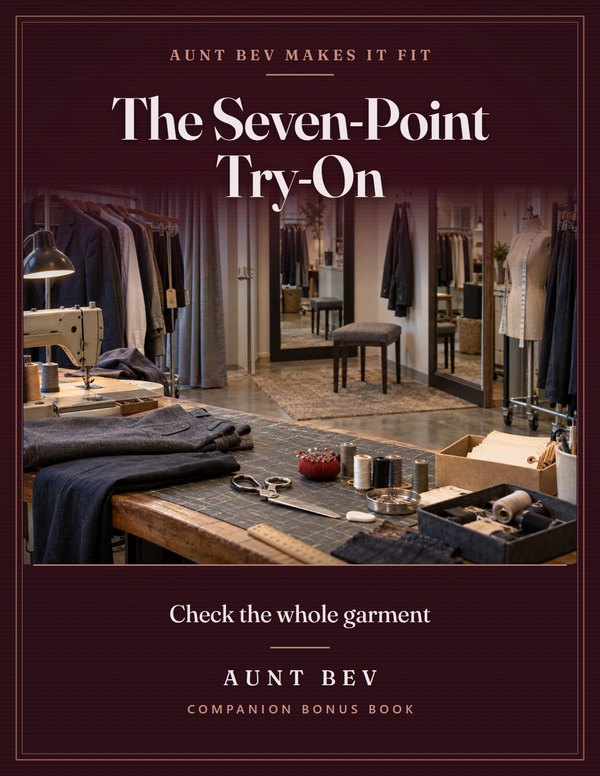
The Seven-Point Try-On
Check the whole garment.
A large-print mirror checklist for shoulder, sleeve, closure, waist, seat, hem, and comfortable movement. 30 pages.
Estimated value $12Included with the $29 book
Bonus book 2 of 3
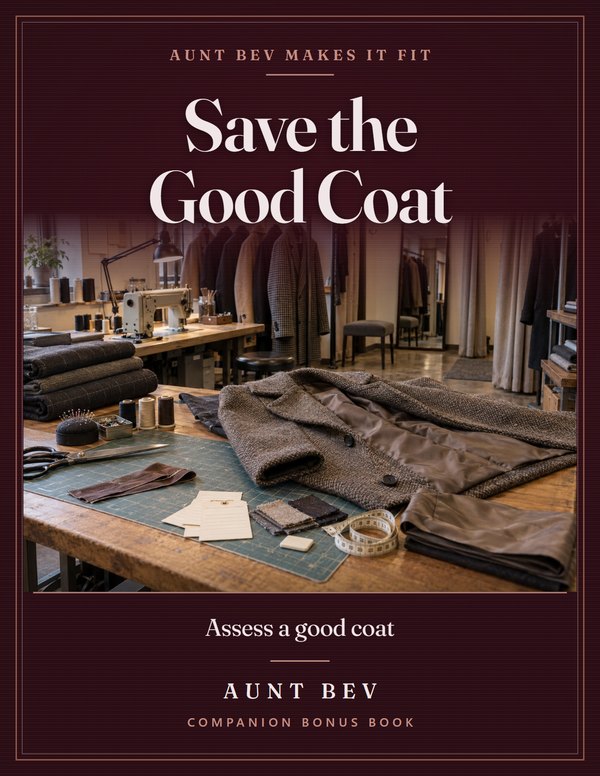
Save the Good Coat
Assess a good coat.
A repair, alteration, lining, closure, and retirement decision mini-book for a well-made coat. 34 pages.
Estimated value $11Included with the $29 book
Bonus book 3 of 3
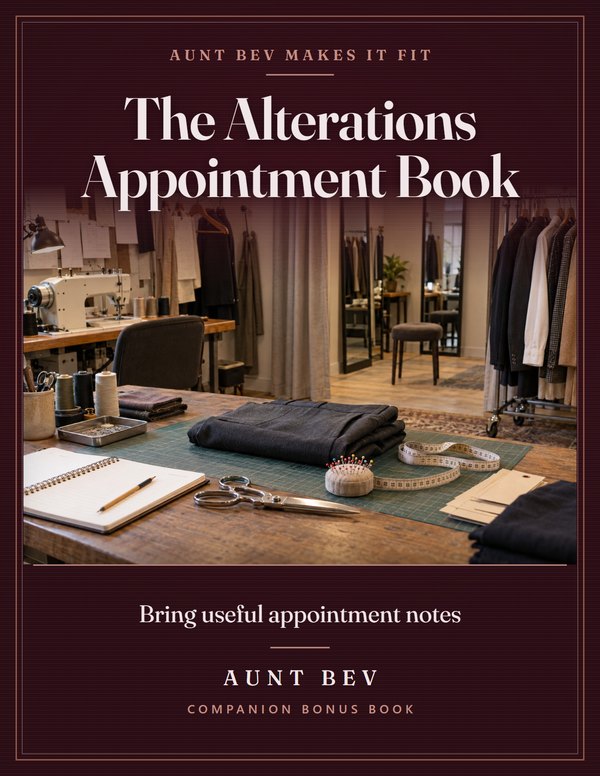
The Alterations Appointment Book
Bring useful appointment notes.
A practical log for garment photographs, pinning notes, measurements, questions, and completed work. 32 pages.
Estimated value $10Included with the $29 book
Plus, at no extra charge: lifetime updates to the main book.
Individual values are estimates set by Aunt Bev, not previous selling prices. No physical books are shipped.
04 · The honest part
What you won’t find in this book.
✕Not in this book: A claim that every garment is worth altering.
I show you how to inspect the garment and decide whether a change is worth discussing.
✕Not in this book: A rule that the size label explains the fit problem.
I help you look at the waistband, rise, shoulder, sleeve, lining, seam allowance, and cut.
✕Not in this book: A reason to blame your body when clothing feels wrong.
I keep the attention on what the garment is doing.
✕Not in this book: A reason to cut before you have tested the change.
I show you ways to mark, pin, check, and keep early decisions reversible.
Aunt Bev
Aunt Bev
05 · Who wrote it
Aunt Bev knows the alterations counter
Aunt Bev is 71 and lives in Fort Wayne, Indiana. She spent 38 years in a department-store alterations room, fitting ordinary customers and talking through what was bothering them about a garment.
She knows the difference between a size-label problem, a cut problem and a change worth discussing with an alterations shop, from everyday trousers, coats, dresses, skirts and blouses to the waistbands, hems, sleeves and linings that decide whether good clothes get worn or left in the closet.
Her book never blames the body. It helps you look at the garment first, save what is worth saving, and arrive at an alterations appointment with useful questions.
PDF and EPUB editions to download, read or print. No subscription. No shipping.
175 pages · 11 chapters · 3 bonus books
Your Jeans, the Right Length, Original Hem Intact
You receive Your Jeans, the Right Length, Original Hem Intact as digital PDF files, along with the companion materials. It is $29, with instant download after payment, no subscription, and no shipping.
$29$39Launch price — ends October 08
Use the book to prepare clear questions before you alter a garment yourself or discuss it at an alterations shop.
What you get for $29:
Individual values below are publisher estimates. Everything is included in your $29 purchase.
Your Jeans, the Right Length, Original Hem Intact
72 Methods for Jeans Hemming, Trouser Fit, and Safer Sewing
$39
Bonus book 1The Seven-Point Try-On
A large-print mirror checklist for shoulder, sleeve, closure, waist, seat, hem, and comfortable movement. 30 pages.
Est. value$12Included
Bonus book 2Save the Good Coat
A repair, alteration, lining, closure, and retirement decision mini-book for a well-made coat. 34 pages.
Est. value$11Included
Bonus book 3The Alterations Appointment Book
A practical log for garment photographs, pinning notes, measurements, questions, and completed work. 32 pages.
Est. value$10Included
The printable field kit
76 printable pages: the worksheets and cards to use beside the book.
Included
Lifetime updates
Future revisions of this book at no extra charge.
$21
3 bonus books combined$33
Total estimated package value$93
You pay today$93$29
Secure one-time checkout. Your digital books are ready to download after confirmed payment.
Instant download · PDF + EPUB · print only the pages you need
Published by Aunt Bev
30days
The Read-It-First Guarantee. Read the whole book and try it for 30 days. If it is not worth what you paid, ask for your money back through Whop, where you paid, and every dollar comes back, no questions asked. Whatever you have already downloaded, bonus books included, stays yours. You should not have to judge a book by its sales page.
07 · Questions
Questions worth answering
What exactly do I receive?
You receive digital PDF files for the book and its companion materials. The book has 175 pages and 11 chapters, with 72 methods for jeans hemming, trouser fit, and safer sewing.
Can I print it?
The book is delivered as digital PDF files. You can use the files in the way that suits your reading and working setup.
Is it for me?
It is for a reader who wants independent methods for mature clothing fit and alterations. It is especially useful when you want to check the garment before deciding what to alter or what to ask at an alterations appointment.
How do I start?
Choose a garment with a clear complaint and write that complaint in plain words. Then begin with the chapter that matches the issue, such as jeans length, a trouser waist, loose sleeves, or a boxy shirt.
What if it does not help me?
Ask for your money back through Whop within 30 days and every dollar comes back, no questions asked. That is the Read-It-First Guarantee: read the book first, then decide.
Do I need to sew every method myself?
No. The book also helps you test fit, inspect construction, and compare alteration options before doing the work or paying for it. Some methods help you arrive at an alterations appointment with useful questions.
Does it only cover jeans?
Jeans hemming and original hems are a central part of the book. It also covers trouser waists and seats, T-shirt sleeves, boxy shirts, alteration decisions, and well-made coats.
Can I read it on a Kindle or e-reader?
Yes. The main book also comes as an EPUB file, which opens in Kindle (through Send to Kindle), Apple Books, Kobo and Google Play Books. The workbook and bonus books are PDFs, made to read on screen or print.
Check the garment before you blame yourself
A hem, waistband, sleeve, or coat front can tell you quite a bit when you know where to look. Aunt Bev gives you plain methods for looking carefully before you make the next move.
$29 once · 30-day Read-It-First Guarantee · instant digital download